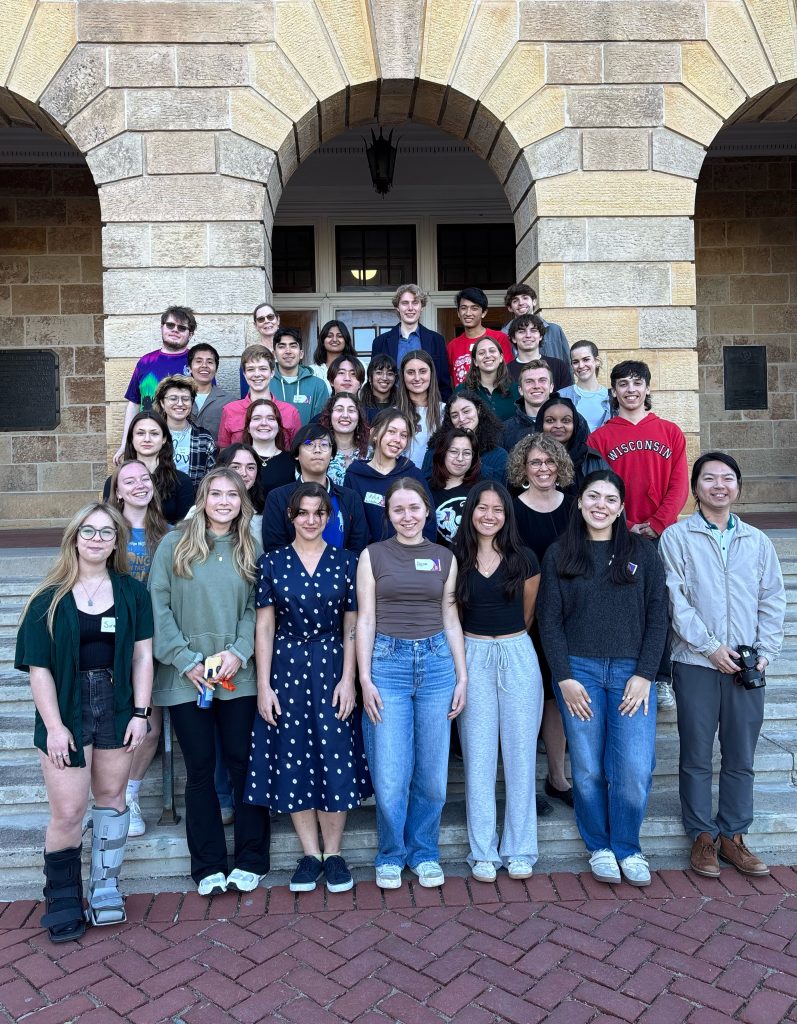
 For over two decades, Jolanda Vanderwal Taylor has been a foundational pillar of the Wisconsin International Scholars (WISc) Program, which cultivates a small cohort of undergraduates with mentorship, language study, unique course opportunities, and study abroad grants. As she steps down from her role as faculty chair after 21 years, we reflect on her remarkable impact.
Vanderwal Taylor joined the WISc Program in its first year and helped shape it into what it is today. The program ensures accessibility to students with talent and potential, regardless of their backgrounds and academic pursuits.
“One of the brilliant things about the program is the wide range of majors, which fosters cross-disciplinary discussions among the students,” said Vanderwal Taylor. ”And that’s what makes it rewarding. Global problems and initiatives need a lot of different perspectives and we’ve had the richest experiences when we’ve had students from different backgrounds talking to each other, learning from each other, and supporting one another.”
Kate McCleary, associate dean of academic initiatives in the International Division, notes how her leadership has been instrumental in the program’s success.
“For me, having Jolanda at the helm of this program has led to the integration of culture and language study,” said McCleary. “She’s involved in associations in the Netherlands and throughout Europe, so she brings those connections into the classroom.”
A hallmark of Vanderwal Taylor’s tenure has been her deep commitment to mentoring students. Her dedication has created lasting connections with countless alumni. McCleary highlighted that the level of mentorship she’s provided the WISc scholars over the years has lifted them up and provided an ongoing connection.
Her impact is seen in the lives of her students, many of whom have gone on to make a positive difference in the world. When asked to pick a standout story, Vanderwal Taylor found it impossible to choose just one, listing international journalists, USAID workers, and professionals in medicine, law, and business. She did, however, share a poignant story about a student who, despite family reasons bringing her back to Wisconsin, found a way to apply their global experience and language expertise locally by helping newcomers settle into the community.
“Which shows that you can do global work right here in Wisconsin,” she reflected. “The students are just brilliant. I learned things from them every day. I learned about their resilience, their hope for the world, their commitment to making the world a better place. Watching them dig in and learn a language, and then go study abroad for a year in a country where it’s their second language or their third language…it’s fantastic.”
As Vanderwal Taylor moves on to a well-deserved research leave, she looks forward to dedicating time to her own scholarly pursuits in Dutch literature and culture.
She made it a point to emphasize that the WISc Program legacy is not hers alone. She is immensely grateful to the International Division and her collaborators, who include McCleary, numerous dedicated faculty/staff mentors, and especially Melody Niwot, associate director for the WISc Program.
“This is a community effort,” she said. “It wasn’t just me. It was us.”
This collaborative spirit is what she hopes will continue to define the program, alongside students continuing to educate each other and support each other in their global learning.
The International Division extends its sincere thanks to Vanderwal Taylor for her outstanding contributions to the WISc Program for the past two decades. Her years of service have left an indelible mark on the program and the hundreds of students she mentored. Her energy, commitment, and vision have created a global community that extends far beyond the university and will continue to inspire for years to come.
To learn more about the WISc Program, visit their website. Applications for the 2026-2027 academic year open on November 1, 2025.
Story by Kayla Daum